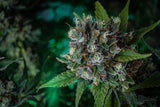
You are six or seven weeks into flower and the colas look the way you hoped. Then one morning the top of the biggest one has changed. Small, pale spikes are poking out of the bud, each one a short tuft of new flowers with fresh white hairs, sitting on a cola whose older hairs have already turned orange. A few days later there are more of them. That is foxtailing, and the first thing most growers want to know is whether they did something wrong.
Sometimes yes, sometimes no. This guide shows you how to tell which in about two minutes, what the research does and does not say about the cause, the six steps that stop stress foxtailing without dimming the whole tent, the look-alikes that get mistaken for it, and whether a foxtailed bud is worth smoking. The short version of the last one: it is.
What Foxtailing Actually Is
A cannabis bud is not one flower. It is a tight cluster of hundreds of small ones. Each female flower sits inside a calyx, a small green pod, with two white hairs called pistils sticking out of it. A cola is simply the big cluster at the end of a branch, and the one at the very top of the plant is called the apical cola.
What makes a cola dense is how the tip of the branch behaves once the light schedule switches to 12 hours on and 12 off. Hanan Alter, Ben Spitzer-Rimon and colleagues at Israel's Volcani Institute tracked exactly this. Under short days the growing tip branches hard, grows fewer leaflets, and shortens both its leaf stalks and the gaps between its nodes, and that is what packs the flowers into a tight cluster. The short days work through a drop in the growth hormone gibberellin at the tip.2

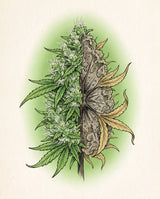
Foxtailing is what it looks like when that packing loosens on the outside of a bud, usually near the top. The bud keeps building new calyxes, but instead of folding them into the cluster it stacks them upward and outward in short, spiky tufts. The new calyxes carry fresh white pistils, which is why a foxtail stands out so clearly against an older bud that has turned orange. Alter's team showed the same loosening on demand in two ways: moving flowering plants back to long days raised gibberellin at the tip and pulled the cluster apart, and applying gibberellin under short days produced what they described as elongated, stretched flower clusters.2 Nobody has yet shown that heat or light works through the same hormone, but it tells you what a foxtail is: a growing tip that has partly stopped behaving like a flower cluster.

The words you will meet in this guide
| Term | What it means here |
|---|---|
| Calyx | The small green pod that holds each female flower. Buds are built from hundreds of them. |
| Pistil | The white hairs that stick out of each calyx. They turn orange or brown as the flower ages. |
| Cola | The large bud cluster at the end of a branch. The apical cola is the one at the very top. |
| Canopy | The top layer of the plant, where the colas sit and where most of the light lands. |
| PPFD | How much usable light is landing on a spot, in micromoles per square meter per second (µmol/m²/s). A light meter or the maker's light map gives you this number. |
| Radiant heat | Heat that a lamp puts straight into the leaves and buds under it, on top of the heat in the air. |
| Re-veg | A flowering plant slipping back toward leafy growth, usually because light reached it during the dark period. |
Genetic or Stress? How to Tell in Two Minutes
Every guide on this topic lists the same causes: genetics, heat, light, and sometimes feeding or pH. What most of them skip is that the first one and the rest look different on the plant, and the difference is visible without any equipment. Where the foxtails are tells you more than what they look like.
Genetic foxtailing: every cola, all the way down
Some cultivars simply build their buds this way. Long-flowering sativa-leaning plants and haze types are the usual examples: their colas grow as long spears of stacked calyxes rather than round, fist-shaped nuggets. Genetic foxtailing shows up on the lower colas as much as the top ones, including buds that sit a long way from the lamp in cool air. It builds gradually over the second half of flower, and the new calyxes are the same color as the rest of the bud.

If that describes your plant, there is nothing to fix. The plant is doing what it was bred to do. Harvest it on the trichomes, like any other, and decide after the dry whether you want that cultivar again.
Stress foxtailing: only the tops nearest the light
Stress foxtailing is confined to the part of the plant that takes the most heat and light: the tops of the tallest colas, usually right under the center of the lamp. The buds lower down on the same plant stay round and dense. It tends to appear within days of something changing, such as a hot week, a light raised to full power, or a cola that stretched up into the hot spot. The new growth is often a paler lime green than the bud under it, and the leaves around it may be bleached, curled up at the edges, or crispy at the tips.

That pattern is the useful part. A problem that follows distance from the lamp is coming from the lamp. A problem that follows the plant's genetics shows up everywhere.
| What to check | Genetic foxtailing | Stress foxtailing |
|---|---|---|
| Where on the plant | Every cola, including the low ones | Only the tops nearest the lamp, often in the center |
| When it starts | Builds steadily through the second half of flower | Appears within days of a hot spell or a light change |
| Color of the new growth | Same green as the rest of the bud | Often paler, sometimes bleached white at the very tip |
| Leaves around it | Healthy | Often curled up at the edges, bleached or crispy |
| Bud shape overall | Long spears of stacked calyxes | Round, dense bud with spiky tufts on top |
| What to do | Nothing; harvest on the trichomes | Cool the tops, then even out the light |

Timing adds a second check. Genetic foxtails grow in with the bud, week by week. Stress foxtails arrive in a burst after something changed in the room, and they should stop arriving once it is put right, though the ones already there stay.

What the Research Actually Says About Light, Heat and Foxtails
Here is the uncomfortable fact behind most foxtailing advice: we could not find a single controlled trial that measured foxtailing in cannabis. Every page in the top search results, including the seed banks and nutrient companies, is reporting growers' experience. That experience is worth a lot, but it has one blind spot. In a real grow tent, a light hung too close brings more light and more heat to the top of the plant at the same time, so nobody watching the plant can say which one did it. What the trials can tell you is what happens to the top buds when one of the two moves and the other is held still.
More light, held at normal temperatures, made denser tops
Rodriguez-Morrison, Llewellyn and Zheng grew cannabis under canopy light from 120 to 1,800 µmol/m²/s, well past anything a home grower runs, while the canopy air stayed at about 77°F (25°C). Yield rose in a straight line the whole way, from 116 to 519 grams of dried flower per square meter. The density of the top cola also rose steadily, from 0.089 to 0.115 grams per cubic centimeter, 1.3 times denser at the brightest setting than the dimmest.1 A second Guelph trial by Llewellyn and colleagues compared 600, 800 and 1,000 µmol/m²/s and found 1.6 times more flower at the top setting, and noted that the top colas in every treatment looked alike at harvest.3

Neither paper reports foxtailing, and a paper not mentioning something is not proof it never happened. But if strong light alone made cannabis foxtail, the top colas at 1,800 µmol/m²/s are where it would have shown, and those were the densest top buds in the trial. That is why we do not tell anyone to dim the whole tent the moment they see a foxtail. Cutting light across the canopy costs yield on every plant to fix a problem on a few tops.
Too much light shows up at the tip of the top cola
Light is not blameless, though. Mexx Holweg, Leo Marcelis and colleagues at Wageningen University grew cannabis at 600 and 1,200 µmol/m²/s under several LED spectra. At 1,200, under one spectrum with a lot of red light, some flowers bleached white, and those bleached flowers were found only at the tip of the top colas.4 That is the same place stress foxtails show up. The bleached tissue actually carried more total cannabinoids than green tissue, mostly CBD, while THC was unchanged. The Wageningen team did not report foxtailing either, but their result shows where on the plant too much light first does visible damage: the very top of the cola.

Heat is the part nobody held still
The leaves are not what gets hurt at typical grow-room temperatures. Suman Chandra and colleagues at the University of Mississippi measured cannabis photosynthesis across a range of temperatures and found it peaked at 86°F (30°C).5 The flower-stage band our indoor growing guide gives, 70 to 80°F (21 to 27°C), falling to 65 to 75°F (18 to 24°C) late in flower, is there for the buds rather than the leaves, and our flowering guide names temperatures above 85°F (29°C) in mid-flower as one of the four usual causes of airy buds.

The catch is where that temperature is measured. A hygrometer on the tent wall reads the air at the wall. The top of a tall cola sits in the warmest air in the tent, closest to the lamp, and on top of the air temperature it takes radiant heat straight from the fixture. Jacob Nelson and Bruce Bugbee at Utah State University measured leaf temperature under sunlight, high pressure sodium (HPS) lamps and LEDs. Leaves that were not short of water stayed within about 4°F (2°C) of the air under every source, and at the same light level, leaves under LEDs ran about 2.3°F (1.3°C) cooler than leaves under HPS.6 That gap is between the two lamps, not between the leaf and the air, but it means an HPS lamp hung at an LED's distance puts more heat into the tops.

So the honest summary is this. Strong light at a normal temperature made denser tops in the trials. Very strong, red-heavy light damaged the tip of the top cola. Heat at the tops has never been separated from light in a trial on foxtailing. Put together, the cheapest and safest thing to fix first is the temperature at the tops, and only then the light over the one hot spot.
What Causes Stress Foxtailing
These are the situations that put a few tops under more stress than the rest of the plant, in the order we would check them.
- A hot top of the canopy. A wall hygrometer can read a comfortable 78°F (26°C) while the air at the tops, right under the lamp, runs several degrees hotter, especially in the last hours of the lights-on period or during a summer heat wave.
- One cola in the hot spot. Most fixtures are brightest and warmest in the middle. A single tall cola that stretched up into that spot is closer to the lamp than its neighbors, in its brightest and warmest air, and in a different grow from the colas around it.
- A sudden jump in light late in flower. Turning a dimmer up to full in week 6 hits buds that formed under less light, and it raises the heat at the tops at the same time.
- An HPS lamp hung for LED distances. HPS puts more radiant heat into the tops at the same light level.6
- A long flowering period outdoors. Late-season sativas still flowering through a late-summer heat wave can foxtail on their tops for the same reasons, though genetics usually play the bigger part outdoors.

Feeding and pH are also blamed on some forums. We could not find any evidence tying them to foxtailing, and a feeding problem shows up on the leaves in a pattern you can read in our deficiency guide, not as spires on the tops. Fix the heat and the light first. If the foxtails keep coming with the tops at a normal temperature and an even light, it is almost certainly genetic.
How to Stop Foxtailing: Step by Step
Foxtails that have already formed will not shrink back into the bud. What you can do is stop new ones forming on the buds that are still filling, and keep the ones you have from getting worse. The whole plan fits on one page.

Step 1 - Make sure it is foxtailing
Check the plant against the look-alikes further down this page before you change anything. Leafy growth coming out of the buds is a light leak, not heat. Fat, swollen calyxes in the last two weeks are normal ripening. If it is foxtailing, use the table above to decide whether it is genetic or stress. For genetic foxtailing, skip to Step 6.
Step 2 - Measure the temperature at the tops
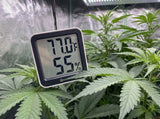
Move your thermometer to the height of the tallest colas, in the shade of a leaf so the lamp does not heat the sensor directly, and read it near the end of the lights-on period, when the tent is warmest. Then point an infrared thermometer at a fan leaf right beside a foxtailing top. If the air at the tops is above 85°F (29°C), or that leaf reads more than about 4°F (2°C) hotter than the air beside it, the tops are running hot.6 A leaf that is much hotter than the air is either taking radiant heat from the lamp or short of water, so check that the pot is not bone dry before you blame the light.

Step 3 - Cool the top of the canopy
Bring the air at the tops back inside 70 to 80°F (21 to 27°C), or 65 to 75°F (18 to 24°C) in late flower. In a tent that usually means running the exhaust fan harder, adding a small fan that blows across the tops rather than straight down onto them, and letting cooler air in at the bottom. If the whole room is hot in summer, run the lights during the night, when the house is coolest. Moving air also breaks up the pocket of hot, still air that sits right under a fixture. One thing to watch as the tops cool: the same air reads a higher humidity when it is cooler, so keep the hygrometer inside your flowering band, because the dense bud under a foxtail is still where bud rot starts.

Step 4 - Raise or dim the light over the hot spot only
Once the tops are at a normal temperature, look at the light. Our flowering guide puts the usual target at 600 to 900 µmol/m²/s mid-canopy, and says the plant can use more. The goal here is not less light for the whole tent. It is the same light on the foxtailing tops as on the rest of the canopy. Raise the fixture a few inches (5 to 10 cm), or dim it a step, until a light meter or the maker's light map shows the tops no brighter than the colas around them. If only one cola is foxtailing because it stands far above the others, set the light for that cola rather than for the rest, and level the canopy in veg next time. Bending it down now is training in flower, and by this stage a new bend can only risk the buds you already have.

Step 5 - Leave the foxtails on the plant
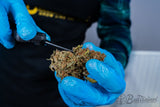
Do not cut foxtails off. They are part of the bud, they carry trichomes like the rest of it, and cutting into a cola in late flower opens a wound where mold can start. Trim them at harvest with the rest of the sugar leaf if they look ragged.
Step 6 - Harvest on the trichomes, not on the foxtails
A foxtail's fresh white pistils make a ripe bud look younger than it is. Ignore them. Read the trichomes on the calyxes of the older bud, not the new spires, the way our harvesting guide sets out: 80 to 90 percent milky with 5 to 10 percent amber, checked at 30 to 60x in three to five places. That guide also covers the one case where foxtails change the call: if you see foxtails and the calyx trichomes are already 80 percent milky, harvest rather than wait, because the plant is not going to improve from there.

Under the loupe, the heads you are reading look like this. Pick calyxes low on the bud, below the foxtails, where the flowers are as old as the rest of the cola.

How to Prevent Foxtailing Next Time
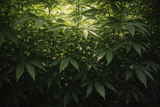
Stress foxtailing is usually a canopy problem before it is a light problem. A plant with one tall cola and a dozen short ones puts that one cola in the hottest, brightest spot in the tent for the whole of flower. A flat canopy, where every top sits at about the same height, spreads the light and the heat evenly, and there is no single top for the stress to land on. It is one of the quieter benefits of training every plant, and the science of an even canopy is worth reading once.
- Train in veg for a flat top. Topping plus continuous low-stress training, as our training guide lays out, or the bend-first route in the LST guide. BudClips hold each bend in place during veg.
- Use a net through the stretch. A SCROG net lets you keep tucking tops back under the screen until the stretch ends around day 21, which is exactly when tops race toward the lamp. After that it is support only.
- Flip at the right height. Our beginner's guide flips a photoperiod plant to 12/12 once it has filled about half the height you can give it, because the stretch adds half to double again. Flip too late and the tops end the stretch in the hot spot.
- Support the heavy colas. BudHuggers hold a cola where you want it once it gets heavy, so it does not lean into the hottest part of the tent.
- Know your cultivar. If a cultivar foxtailed on every cola last time in a cool, evenly lit tent, it will do so again. Decide whether you like the result before you grow it again.

Foxtails vs Look-Alikes
Three other changes late in flower get called foxtailing, and each one has a different fix. Telling them apart takes a close look at the new growth.
| What you see | What it is | How to tell |
|---|---|---|
| Short, spiky tufts of new calyxes with white pistils | Foxtailing | The new growth is flowers, not leaves |
| Small leaves with one to three rounded blades growing out of the buds | Re-veg from a light leak | The new growth is leaves; check the tent and timer during the dark period |
| Fat, swollen calyxes and a bud that looks bigger in the last weeks | Normal ripening | The bud gets rounder, not spikier, and no new spikes form |
| Loose, fluffy buds lower on the plant | Airy buds from low light | It is worst low down, far from the lamp, which is the opposite of stress foxtailing |
| Yellow, banana-shaped pods poking out of the bud | Nanners, male flowers on a female plant | They are smooth pods with no pistils; they can pollinate your buds |
Re-veg is the one that matters most, because it means something is wrong with the dark period and it can ruin the rest of the harvest. Alter's team showed that a flowering plant put back under long days pulls its flower clusters apart and starts growing stems and leaves again.2 In a tent, that happens through a light leak or a timer that switches on during the night. Scott Golem's tell, from our flowering guide, is the leaves: new growth comes out deformed, with two or three blades where you would expect five or more, or with single rounded blades. Leaves, not flowers, is the difference.

Late ripening is the other common mix-up. In the last couple of weeks calyxes swell and a bud can look noticeably bigger. That is the plant filling out, not foxtailing: the bud gets rounder rather than spikier. And if you find smooth yellow pods, our guide to male and female plants covers what nanners mean and what to do about them.

Airy buds are the easiest to rule out, because they sit in the opposite place. Loose, fluffy buds on the lower branches, far from the lamp, are short of light, not stressed by it. Stress foxtails sit on the tops.

Are Foxtailed Buds Bad? Can You Smoke Them?
Yes, you can smoke them, and there is no evidence that a foxtailed bud is weaker. Nobody has measured the potency of foxtails themselves. The one measurement that comes close is Holweg's: the light-bleached tips of top colas carried more total cannabinoids than the green tissue, with THC unchanged.4 What foxtailing costs you is looks and weight. A spiky bud is less dense, so it weighs less for its size, and it looks less tidy in the jar.

Two practical notes. Foxtailed buds trim better by hand: as our trimming guide explains, a loose or foxtailed bud run through a bowl trimmer hangs into the blades and gets shredded. And an airy bud dries a little faster than a dense one, so check foxtailed buds first when you follow our drying guide.
Foxtailing Outdoors and in Autoflowers
Outdoors, foxtailing is usually genetic. Long-flowering sativas that are still ripening in October often grow long, stacked colas, and there is no lamp to raise. A heat wave in late flower can add stress foxtails on the sunniest tops, and there is little to do about it beyond keeping the plant watered, since a water-stressed plant runs hot leaves.6 Our outdoor growing guide covers when photoperiod plants finish in your region and when an autoflower is the better choice.

Autoflowers foxtail for the same reasons as photoperiod plants, and the same fixes apply. The one difference is time: an autoflower cannot be given extra weeks to recover, so catching a hot top early matters more. Check the temperature at the tops when an auto starts flowering on its own, around week 3 to 5 from seed, and again as the colas fill.

Frequently Asked Questions
What is foxtailing in weed?
Foxtailing is when a cannabis bud keeps building new calyxes on top of itself late in flower instead of filling out, so short, spiky tufts of fresh flowers with white pistils grow out of a round cola. It is either a trait of the cultivar, in which case it shows on every cola, or a stress response, in which case it shows only on the tops nearest the light.
What causes foxtailing buds?
Two things. Some cultivars, especially long-flowering sativas and hazes, build their colas that way. In other plants it is stress at the top of the canopy, usually heat, very strong light, or both, since a light hung too close brings both at once. No controlled trial has measured foxtailing itself, so the stress causes come from growers' experience.
Is foxtailing good or bad?
Genetic foxtailing is neither: it is how that cultivar grows, and the buds are fine. Stress foxtailing is a warning sign that the tops are too hot or too close to the light, and it costs you some density and bag appeal. There is no evidence it lowers potency, and the one related measurement found more cannabinoids in light-bleached tips, not fewer.
How do I stop foxtailing?
Measure the temperature at the height of the tallest colas, not on the tent wall. If it is above 85°F (29°C), cool the tops with more exhaust and a fan across the canopy. Then raise or dim the light over the foxtailing tops only, so they get no more light than the rest of the canopy. Foxtails already formed will stay.
Can foxtailing be reversed?
No. Foxtails that have formed will not shrink back into the bud. Fixing the heat and light stops new ones forming on the buds that are still filling. Leave the existing foxtails on the plant, since they are part of the bud and cutting into a cola late in flower can let mold in, and trim them at harvest if they look ragged.
Does foxtailing mean my plant is ready to harvest?
No. The fresh white pistils on a foxtail make a bud look younger than it is, so they tell you nothing about ripeness. Read the trichomes on the calyxes of the older bud with a 30 to 60x loupe instead. If you see foxtails and the calyx trichomes are already 80 percent milky, harvest rather than wait.
Is foxtailing caused by heat or light?
Probably both, and in a tent they arrive together. In a trial that held the air at about 77°F (25°C), raising light to 1,800 µmol/m²/s made the top buds denser, not spikier. That is why we fix the heat at the tops first and then even out the light over the hot spot, rather than dimming the whole tent.
Do LED lights cause foxtailing?
Any light hung too close can stress the tops. At the same light level, leaves under LEDs ran about 2.3°F (1.3°C) cooler than leaves under HPS lamps in a Utah State study, so an LED puts less radiant heat into the tops. Very strong red-heavy LED light has bleached the tips of top colas in a Dutch trial, so distance still matters.
What does foxtailing look like?
Several short, spiky tufts of new calyxes sticking up or out from a bud, each with fresh white pistils, often sitting on a cola whose older pistils have turned orange. Stress foxtails are usually a paler green than the bud under them and sit on the top colas. Genetic foxtails make the whole cola a long, stacked spear.
Can you smoke foxtailed buds?
Yes. Foxtails are ordinary cannabis flowers with trichomes, and there is no evidence they are weaker. They make a bud less dense, so it weighs less and looks less tidy, and they trim better by hand than in a bowl trimmer, which catches loose growth and shreds it. Dry and cure them with the rest of the harvest.
Which strains are known for foxtailing?
Long-flowering sativa-leaning cultivars and hazes are the usual examples, because their colas grow as stacked spears rather than round nuggets. If a cultivar foxtails on every cola in a cool, evenly lit tent, treat it as that plant's shape rather than a problem to fix.
Do autoflowers foxtail?
Yes, for the same reasons as photoperiod plants: genetics, or heat and strong light on the top colas. The fixes are the same. The difference is that an autoflower cannot be given extra weeks to recover, so check the temperature at the tops as soon as it starts flowering, around week 3 to 5 from seed.
References
- Rodriguez-Morrison, V., Llewellyn, D., & Zheng, Y. (2021). Cannabis yield, potency, and leaf photosynthesis respond differently to increasing light levels in an indoor environment. Frontiers in Plant Science, 12, 646020. https://doi.org/10.3389/fpls.2021.646020
- Alter, H., Sade, Y., Sood, A., Carmeli-Weissberg, M., Shaya, F., Kamenetsky-Goldstein, R., Bernstein, N., & Spitzer-Rimon, B. (2024). Inflorescence development in female cannabis plants is mediated by photoperiod and gibberellin. Horticulture Research, 11(11), uhae245. https://doi.org/10.1093/hr/uhae245
- Llewellyn, D., Golem, S., Foley, E., Dinka, S., Jones, A. M. P., & Zheng, Y. (2022). Indoor grown cannabis yield increased proportionally with light intensity, but ultraviolet radiation did not affect yield or cannabinoid content. Frontiers in Plant Science, 13, 974018. https://doi.org/10.3389/fpls.2022.974018
- Holweg, M. M. S. F., Kaiser, E., Kappers, I. F., Heuvelink, E., & Marcelis, L. F. M. (2024). The role of red and white light in optimizing growth and accumulation of plant specialized metabolites at two light intensities in medical cannabis (Cannabis sativa L.). Frontiers in Plant Science, 15, 1393803. https://doi.org/10.3389/fpls.2024.1393803
- Chandra, S., Lata, H., Khan, I. A., & ElSohly, M. A. (2008). Photosynthetic response of Cannabis sativa L. to variations in photosynthetic photon flux densities, temperature and CO2 conditions. Physiology and Molecular Biology of Plants, 14(4), 299-306. https://link.springer.com/article/10.1007/s12298-008-0027-x
- Nelson, J. A., & Bugbee, B. (2015). Analysis of environmental effects on leaf temperature under sunlight, high pressure sodium and light emitting diodes. PLoS ONE, 10(10), e0138930. https://doi.org/10.1371/journal.pone.0138930

About the Author
Henrique Dias is the CEO and co-founder of BudTrainer. He is a mechanical engineer who also holds a graduate certificate in Commercial Cannabis Production from Niagara College in Ontario, Canada - the first college-level cannabis cultivation program in North America. Before founding BudTrainer, Henrique worked with Health Canada licensed cannabis producers, where he gained hands-on experience in cultivation, processing, and post-harvest management of cannabis at commercial scale. He started BudTrainer to bring that same level of craft to home growers through better-designed gardening tools and clear, science-backed education.
DISCLAIMER: Everything taught and sold by BudTrainer® is to be used strictly for legal purposes. We do not endorse the production of illegal substances and it is your duty to ensure that you are complying with the law. The words "hemp," "cannabis," "weed," and "marijuana" are used interchangeably to refer to the same plant (legal hemp with less than 0.3% THC) for the purposes of this lesson.