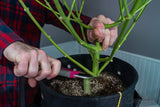
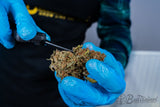
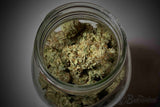
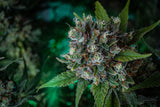
Most guides to trichomes stop at "they are the sticky crystals, and they turn from clear to milky to amber." That is true and it is not much help. This guide covers what a trichome actually is, the five kinds on a cannabis plant, where they grow, how they change week by week through flower, what the research says about frost and potency, which "trichome boosters" have been tested, and how to keep the resin you grew from the day you cut to the day you open the jar. Reading trichomes to time a harvest has its own guide: our harvesting guide walks through the loupe, the sampling routine and the harvest window, and we only summarize it here.
What Are Trichomes on Weed?
A trichome is any small outgrowth of a plant's skin. Most plants have them: the fuzz on a tomato stem and the sting of a nettle are trichomes. On cannabis, the ones that matter are glands: microscopic, mushroom-shaped structures with a round head on top of a stalk. They cover the flowers so thickly that a ripe bud looks dusted with sugar or frost, which is where words like frosty, crystals and resin come from.
Those glands are the plant's chemical factories. Cannabinoids such as THCA and CBDA, and the terpenes that give each cultivar its smell, are made in the glands and stored in their heads. Small and Naraine put it plainly: most of a cannabis plant's THC sits in the resin heads of its stalked glands.2 Everything else on the plant, the leaves, the stems and the bud's green tissue, carries very little. That is why trim with sugar leaves on it is worth keeping for hash, and why a bud that has been rubbed bare is worth less than one that has not.

Female flowers carry by far the most glands. Male flowers have very few, which is part of why male plants are not smoked, and one reason growers remove them before they pollinate a crop (our guide to telling male from female plants covers how to spot them early). Livingston and colleagues at the University of British Columbia describe male flowers as having a scarcity of glandular trichomes.4
Why does the plant bother? Nobody knows for certain. Tanney and colleagues, reviewing the research in 2021, wrote that the exact benefit of cannabinoids and terpenes to the plant has yet to be discovered; the leading ideas are defense against insects, protection from microbes, and possibly shielding against ultraviolet light.5 For a grower, the practical point is simpler: the glands are the crop.
How a trichome makes THC
Cut a stalked trichome in half and it has three parts that matter. At the base of the round head sits a flat disc of secretory cells, the living part that does the chemistry. Above that disc, filling most of the head, is a storage cavity full of resin. And around everything is a thin waxy skin, the cuticle, that holds the resin in.

The odd thing about this design is where the THC ends up. Sirikantaramas and colleagues showed that the enzyme that makes THCA is sent out of the secretory cells into the storage cavity, and that THCA is made there, outside the living cells.6 Tanney's review explains why that makes sense: THCA and the other secreted compounds can be toxic to plant cells, so the plant keeps them in a sealed space above the cells that made them.5
What the gland stores is mostly the acid form, THCA, which does not get you high. Heat from a flame, a vaporizer or an oven removes a small part of the molecule (decarboxylation) and turns THCA into THC.4 That is also why the resin is fragile: it is a soft, sticky ball held up on a thin stalk, and a finger, a scissor blade or a tumbling machine can knock it off.
The Five Kinds of Trichome on a Cannabis Plant
Not every trichome on the plant is a resin gland. Dayanandan and Kaufman's scanning microscope survey in 1976 sorted cannabis hairs into non-glandular ones, which make nothing, and glandular ones, which do.7 Later work split the glands into three types.48 Here are all five, from the ones you can ignore to the one that matters most.

| Type | What it looks like | Where it grows | What it makes |
|---|---|---|---|
| Covering hair | A long, thin, pointed hair with no head | Stems and leaves | Nothing; a physical barrier |
| Cystolith hair | A short, hooked hair with a mineral crystal in its swollen base | Upper surfaces of leaves and bracts | Nothing |
| Bulbous gland | The smallest gland: a tiny round head, 15 to 30 µm, on a stalk of one or two cells | Scattered and easy to miss | Very little |
| Sessile gland (capitate-sessile) | A round head sitting almost directly on the skin, with an 8-cell disc | Leaves and young flowers | Some cannabinoids, fewer of the lighter terpenes |
| Stalked gland (capitate-stalked) | A big round head, 40 to 110 µm or more, on a stalk up to about 1 mm (0.04 in) tall, with a 12 to 16-cell disc | Bracts and calyxes of female flowers, sugar leaves | Most of the THCA, CBDA and terpenes |
The non-glandular hairs are worth knowing for one reason: they are what you see on a seedling or a fan leaf when someone tells you the plant is "already making trichomes". Dayanandan and Kaufman found them heavily loaded with silica, and the cystolith hairs carry a crystal of calcium carbonate, which helps forensic labs identify cannabis even from ash.7 They make no THC.

The two big glands are the interesting pair. Livingston's team found that stalked glands carry 12 to 16 secretory cells in their disc, glow blue under a special microscope in a way that matched high cannabinoid levels, and make a terpene mix rich in the lighter, more aromatic monoterpenes. Sessile glands on mature flowers and leaves have 8 cells and a heavier terpene mix. Their evidence also suggests that many stalked glands start life looking sessile and grow a stalk as the flower matures.4 One caution: that study used Finola, a fast-flowering hemp, so the details may differ in a high-THC cultivar.

Where Trichomes Grow on the Plant
The stalked glands concentrate on the bracts, the small leaf-like structures that wrap each seed pod in the bud, which growers usually call calyxes. Tanney's review notes that they extend out onto the sugar leaves, the small leaves that grow out of the bud itself, while fan leaves carry mostly sessile glands.5 The same review notes that flowers at the top of the plant tend to carry more cannabinoids and terpenes than flowers lower down.

Punja, Sutton and Kim, looking at two high-THC cultivars under the microscope, found more glands on the lower (outer) surface of each bract than on the upper surface, and very different numbers between the two cultivars: Space Queen carried more glands at every sampling date than Moby Dick, with longer stalks, while Moby Dick grew bigger heads.8 In plain terms: where you look on a bud, and which cultivar you are looking at, changes what you see.
What this means at the bench:
- The bud is the crop. Bracts and calyxes carry the stalked glands, so how dense and well-lit your buds are decides most of your resin.
- Sugar leaves are worth saving. They are frosted with the same kind of glands, which is why sugar-leaf trim makes good hash and edibles. Our trimming guide lists the four best uses for trim.
- Fan leaves are not. They carry far fewer glands, mostly small sessile ones, so there is little point in saving them.
- Sugar leaves ripen ahead of the bud. Their glands run about a week ahead of the calyxes, so a harvest timed off sugar leaves comes too early. Read the calyxes, as our harvesting guide explains in where to look on the bud.

How Trichomes Develop Through Flower, Week by Week
Trichomes are not frozen in place once they appear. They grow, fill, change color and eventually break down, all within the flowering stage. The best measurements of that cycle on drug-type cannabis come from Punja, Sutton and Kim, who examined the bracts of two eight-week cultivars every week or two from week 3 to week 8 of flower.8

- Around week 3: the glands on the bracts were mostly sessile, sitting low on the skin, with a few stalks just starting to form.
- Weeks 3 to 6: the heads grew in both cultivars, and stalked glands became the majority. By week 6 the heads averaged about 90 µm across in Moby Dick and 75 µm in Space Queen, and Space Queen's stalks averaged about 0.5 mm (0.02 in) tall, some reaching about 1 mm (0.04 in).
- From about week 5: some glands began releasing resin, some heads came loose and fell off, and some began to wither. All three went on until harvest. The authors suggest stress such as heat or drought can bring this on earlier.
- Week 8: a large share of the heads were visibly brown. In one week-8 sample they counted 83 clear heads, 96 milky and 52 brown.

Two things follow from this. First, the frost you see in week 4 is not the frost you will harvest: the heads are still growing and the stalked glands are still taking over, so do not judge a cultivar's resin early. Second, the cycle does not stop at "ripe". From week 5 on, a plant is gaining new heads and losing old ones at the same time, which is the real reason a harvest window exists. Wait too long and heads keep turning brown and falling off.
Autoflowers follow the same pattern on a shorter clock. No trial we found has measured trichome development in an autoflower separately, so use the same signs. Our flowering stage guide covers what else is happening each week.
Clear, Milky and Amber: What the Color Change Is
Under a loupe, trichome heads move through three colors. Clear heads look like glass. Milky (or cloudy) heads look like frosted glass and no longer let light through. Amber heads have turned gold to brown. A ripe bud usually carries all three at once.

Punja's team measured this directly on a cultivar called Hash Plant: from week 3 to week 7 of flower, the heads became steadily less see-through and redder in tone, and by week 8 a large share were brown.8 Our harvesting guide explains what each color means for the effect and why amber is THC breaking down, and it sets the harvest window we use: harvest when the calyx trichomes are 80 to 90 percent milky and 5 to 10 percent amber for a balanced effect, with 85 to 90 percent milky and 0 to 5 percent amber for a clearer high, or 70 to 80 percent milky and 15 to 20 percent amber for a more sedating one. The full method is in our guide to what clear, milky and amber trichomes mean.
Two points from the research are worth adding to that:
- The brown color itself may not be THC. Punja and colleagues attribute the browning of the head to the oxidation of phenolic compounds inside it, and they note that aging glands may also lose THC as resin is released or evaporates.8 No study we found has measured the cannabinoids in single amber heads against single milky ones, so treat amber as a sign of age that comes with THC loss, not as a chemical readout.
- Color is a clock, not a strength meter. A cultivar with small, sparse, fully milky glands is still a low-resin cultivar. The color tells you where the glands are in their life; how much resin they hold is set mostly by genetics and growing conditions.

How to see them
You need magnification: a 30x to 60x jeweler's loupe, a clip-on phone macro lens or a cheap USB microscope. Below about 30x you cannot reliably tell milky from clear. Check under a neutral white light, not the grow light, because a strong grow light can make clear heads look milky. Our harvesting guide covers the full routine, including a sampling protocol you can repeat across several buds.
One thing that confuses new growers: the colored hairs on a bud are not trichomes. Those are pistils, the flower's stigmas, and they turn from white to orange or brown on their own schedule. Our harvesting guide explains why pistil color cannot time a harvest.

Do More Trichomes Mean Stronger Weed?
This is the question behind most searches for trichomes, and the honest answer is: not reliably. A frosty bud is more likely to be a resinous one, but the amount of frost you can see does not predict how much THC it contains. Three findings explain why.
The count alone is a weak predictor. Alberti and colleagues reviewed what is known about trichome density and cannabinoid content in 2025 and concluded that density alone is unlikely to correlate directly with cannabinoid content and does not consistently predict it across genotypes. The enzymes in each gland, how much each head can store, and the cultivar's genetics matter as much or more. They also found the research itself shaky: no standard method for counting trichomes, manual counts open to observer bias, and no agreed definition of which part of the bud to count.1
Head size matters more than people think. Small and Naraine measured resin heads on licensed high-THC medical strains and on industrial hemp, correcting for how much heads shrink after harvest. The high-THC strains averaged heads of 129 µm against 80 µm for hemp, which works out to more than four times the volume of resin per head.2 Two buds with the same number of glands can hold very different amounts of resin.

Type and age matter too. Stalked glands make most of the cannabinoids, sessile ones less, and both change as they age.48 A bud in week 4 can look frosty with small, young heads; a bud kept two weeks past its window can look frosty with heads that are browning and breaking down.
Then there is the camera. Frost photographs best under hard side light against a dark background, which is why bud photos online look so dramatic. Our own photos in this guide were taken that way. A bud that looks dull under a warm ceiling light may hold just as much resin.

So how do you judge a cultivar's strength? The only real answer is a lab test of the dried flower. For choosing seeds, a breeder's published test results tell you far more than a frosty photo; our seed guide covers how to choose. For your own grow, frost is a useful sign that the plant is healthy and the buds are filling, but it will not rank two cultivars against each other.
Can You Increase Trichome Production?
Yes, but mostly not in the ways that get sold. The things that raise how much resin you harvest are the same things that raise how much flower you harvest, plus timing and care at the end. The tricks aimed at the trichomes themselves have little or no evidence behind them.
What raises the resin you harvest
- Genetics. Gland number, stalk length and head size all varied between cultivars in Punja's work, and Small and Naraine trace the big heads of modern high-THC strains to decades of breeding for resin.82 The cultivar you plant sets the ceiling.
- Light. Rodriguez-Morrison, Llewellyn and Zheng raised canopy light from 120 to 1,800 µmol/m²/s and dry flower yield rose in a straight line, from 116 to 519 g/m², while cannabinoid concentration did not change at all.9 More light gave more flower, and more flower means more resin at the same potency. It did not make the flower stronger.
- An even canopy. A flat, open canopy puts more of your buds in strong light instead of shading them under the tops. That is the whole point of training: topping plus continuous low-stress training (LST, bending branches outward) spreads the plant into many even tops. Our training guide explains the routine, and our canopy science guide explains why it works. Clips such as BudClips hold the bends in veg without ties.
- Harvest timing. Cutting at the right window catches the most milky heads before they brown and fall off. That is the one lever every grower controls on the last day.
- A healthy plant through flower. Punja's team suggest heat and drought can bring on the browning and breakdown of glands early.8 Keeping the tops cool and the plant watered on time protects the resin you have. Our grow tent temperature guide covers holding the canopy in range.

What the research says about the trichome boosters
UV light. The idea that ultraviolet light raises THC is decades old. Rodriguez-Morrison, Llewellyn and Zheng trace it to old studies that found more THC in cannabis from sunny, high-altitude regions, and to early chamber work by Lydon and colleagues in 1987.3 Their own trial is the most thorough test so far: two cultivars under UV-B for 3.5 hours a day through 60 days of flowering, at four dose levels. From the lowest to the highest dose, top-cola flower weight fell 78 and 69 percent, total flower weight fell 32 percent in one cultivar, total terpenes fell 41 and 24 percent, and THCA fell 15 percent in one cultivar with no increase in the other. Leaves showed dead patches and early yellowing. Their conclusion was that UV gave no commercially relevant benefit.3 We do not recommend adding UV-B to a home grow.

48 hours of darkness before harvest. This is a popular finishing ritual, and there is no good evidence that it raises trichome content. Our harvesting guide covers the last 48 hours before you cut, darkness included.
Cold nights and other stress. Cold nights can bring out purple color in some cultivars, but we found no controlled trial showing that cold or any other stress raises trichome production in drug-type cannabis. Stress is more likely to cost you flower, and with it resin. Never run the night warmer than the day; our temperature guide explains why.
Sugar, molasses and "trichome booster" bottles. We found no controlled trial on cannabis showing that any of these raise gland numbers or cannabinoids. If a product claims it does, ask for the trial.
| Claim | What the evidence says | Our verdict |
|---|---|---|
| More light, more trichomes | More light grew more flower in a straight line up to 1,800 µmol/m²/s, with the same potency (Rodriguez-Morrison 2021) | Yes, through more flower |
| UV-B raises THC | Less flower, fewer terpenes, no THC gain (Rodriguez-Morrison 2021) | No |
| Darkness before harvest | No good evidence | Skip it |
| Cold nights or stress | No controlled trial on trichomes; heat and drought may speed gland breakdown (Punja 2023) | Keep the plant comfortable |
| Sugar, molasses, booster bottles | No controlled trial on cannabis | Not worth the money |
| The right cultivar | Gland number, stalk length and head size all vary by cultivar (Punja 2023; Small and Naraine 2016) | The biggest lever |
How to Keep Your Trichomes From Harvest to Jar
Every gland you grew can still be lost after the plant comes down. Heads come off on fingers, scissors and machines, they shrink as they dry, and they slowly lose THC in storage. These five steps are what we do to keep as much as possible.
Step 1 - Cut at the right window
Read the calyx trichomes at 30x to 60x across three to five buds, and cut when they are 80 to 90 percent milky with 5 to 10 percent amber for a balanced effect. Keep feeding on the normal schedule and stop all feeds a day or two before the cut. Our harvesting guide has the full method.
Step 2 - Handle branches by the stem, not the buds
Ripe heads break off at a touch and stick to skin and gloves. Cut, carry and hang branches by their bare stems, wear gloves so the resin sticks to them rather than to your fingers, and avoid squeezing buds to "check" them. In the last weeks before harvest, support heavy colas so they do not flop over and rub against each other or the tent wall; tie branches to each other with garden wire such as BudHuggers, or hold them in a trellis net, as our flowering stage guide describes.

Step 3 - Dry slow, cool and dark
Dry in a dark room at 60 to 68°F (15 to 20°C), at 50 percent relative humidity for the first two days, then 55 percent from day 3 until the small stems snap, usually around day 7. Punja's team dried buds for five days at 70 to 75°F (21 to 24°C) and 50 to 55 percent humidity and found the stalks shriveled and twisted but most heads intact, with their skin undamaged.8 Heat is the enemy: terpene loss speeds up sharply above about 104°F (40°C), as our drying guide explains. Our drying guide covers the whole process.

The pair below shows what drying does up close: on the left, a sugar leaf at harvest; on the right, a sugar leaf on a dried, cured bud. Drying shrinks and curls the leaf and shrivels the stalks a little, but the heads stay on. It is handling and trimming that knock them off.


Step 4 - Trim by hand, gently
Machines cost trichomes. Punja and colleagues compared hand-trimmed and machine-trimmed buds under the microscope: the hand-trimmed buds kept their heads with little damage, while after machine trimming many heads had come off or collapsed, leaving bare stalks.8 If you trim by machine, use it on dense buds only and touch up by hand. Whether to trim wet or dry is a separate choice, and our trimming guide covers which method keeps more trichomes.

Whichever way you trim, scrape the resin off your scissors: that dark, sticky buildup is trichome heads, and our trimming guide explains how to collect it as scissor hash.

Step 5 - Jar at the right humidity, cool and dark
Cure in glass jars at 58 to 62 percent relative humidity for 14 to 30 days, then store the jars cool and dark. Trichome heads keep shrinking after harvest: Small and Naraine measured heads losing about 15 percent of their diameter in the first month and 24 percent over the first year.2 THC also slowly breaks down into CBN, faster when warm and in light. Our curing guide explains why cold storage wins.

A well-dried, well-cured bud should still look frosted when it comes out of the jar. If the surface looks bare and dull, the resin was lost somewhere between the plant and the jar, and the steps above are where to look.

Trichomes or Mold?
This worry comes up in every late flower. A loupe settles it in seconds. Trichomes are separate glassy stalks with a round shiny head, standing apart, and they throw light back. Powdery mildew is a flat, dusty gray-white haze lying on top of the leaf, with the green showing through; under the loupe it is a thin, matte felt of fine threads hugging the leaf, with no round heads and nothing standing tall, and it soaks light up instead of sparkling. Our powdery mildew guide shows the two side by side.


Bud rot is different again: it starts inside the densest part of a cola, and the first sign is often a few sugar leaves dying back tan or brown from the middle of the bud, with gray fuzz inside when you open it. Frost on the outside of a bud never looks like that. Our bud rot guide covers what to look for and what to do.

Common Trichome Mistakes
- Judging potency by frost. Frost tells you the buds are healthy and filling. It does not rank one cultivar against another. Only a lab test does that.
- Reading sugar leaves instead of calyxes. Sugar-leaf glands run about a week ahead, so a harvest timed on them comes early.
- Reading under the grow light. A strong grow light makes clear heads look milky. Use a neutral white light.
- Mistaking pistils for trichomes. The orange hairs are pistils. The trichomes are the glittering glands underneath them.
- Buying UV lamps or booster bottles for more resin. UV-B cost flower and terpenes in the one thorough trial, and the bottles have no cannabis trial at all.
- Handling buds by the buds. Every squeeze leaves resin on your fingers. Hold branches by the stem.
- Drying hot and fast. Heat drives off terpenes. Dry cool and slow.
- Running every bud through a trimmer. Machines knock heads off. Hand trim or touch up the best buds by hand.
- Storing jars warm or in the light. THC breaks down faster in warm, bright storage. Keep jars cool and dark.
Frequently Asked Questions
What are trichomes on weed?
Trichomes are the tiny glands and hairs on a cannabis plant's surface. The ones that matter are glands: microscopic mushroom shapes with a round head on a stalk, packed so thickly on female flowers that buds look frosted. They make and store almost all of the plant's THCA, CBDA and terpenes. Most of the THC sits in the heads of the big stalked glands on the bracts and sugar leaves.
Do more trichomes mean stronger weed?
Not reliably. A 2025 review by Alberti and colleagues concluded that trichome count alone does not consistently predict cannabinoid content. Head size, gland type, age and genetics matter as much: Small and Naraine measured resin heads of 129 µm on high-THC strains against 80 µm on hemp, more than four times the volume. Frost means healthy, filling buds. Only a lab test tells you strength.
What do clear, milky and amber trichomes mean?
They show the age of the glands. Clear heads are still young, milky heads are mature, and amber heads are aging as THC breaks down. For a balanced effect, harvest when calyx trichomes are 80 to 90 percent milky and 5 to 10 percent amber. Read them at 30x to 60x under neutral white light, never the grow light, and read the calyxes rather than the sugar leaves.
When do trichomes start forming?
Glands are on the flowers from the first weeks of flower, but they change a lot. In Punja, Sutton and Kim's study of two eight-week cultivars, the glands were mostly small and low at week 3, stalked glands took over by week 6 as the heads grew, and from about week 5 some heads began releasing resin, falling off and browning. By week 8 a large share were brown.
How can I increase trichome production?
Grow a cultivar bred for resin, give it strong, even light, and harvest on time. In Rodriguez-Morrison's trial, more light grew more flower with the same potency, so more resin per plant. Train the canopy flat so more buds sit in good light, keep the tops cool and the plant watered, and handle the harvest gently. UV lamps and booster bottles have no evidence of helping.
Does UV light increase trichomes or THC?
Not in the most thorough trial so far. Rodriguez-Morrison, Llewellyn and Zheng gave two cultivars UV-B for 3.5 hours a day through flowering. At the highest dose, top cola flower weight fell 78 and 69 percent, terpenes fell 41 and 24 percent, and THC did not rise in either cultivar. They concluded UV gave no commercially relevant benefit. We do not recommend it.
Do trichomes keep developing after harvest?
No. Once the plant is cut the glands stop making anything, and from then on the job is to keep what you have. Heads shrink as they dry and age: Small and Naraine measured about 15 percent loss in diameter in the first month and 24 percent in the first year. THC also slowly turns into CBN in storage, faster when warm and bright, so keep jars cool and dark.
Is it trichomes or mold?
Look with a 30x loupe. Trichomes are separate glassy stalks with round shiny heads that sparkle. Powdery mildew is a flat, matte, gray-white mat of threads lying on the leaf surface. Bud rot starts inside the densest part of a cola, often with sugar leaves dying back tan or brown and gray fuzz inside the bud. Frost on the outside of a healthy bud looks like none of these.
Do fan leaves have trichomes?
A few, mostly small sessile glands and non-glandular hairs that make nothing. The big stalked glands concentrate on the bracts and calyxes of the buds and spill onto the sugar leaves. That is why sugar-leaf trim is worth saving for hash or edibles, and fan leaves are not worth much. It is also why sugar-leaf trichomes ripen ahead of the bud and should not be used to time a harvest.
Do male cannabis plants have trichomes?
Very few on their flowers. Livingston and colleagues describe male flowers as having a scarcity of glandular trichomes, which is one reason male plants are not smoked. Males still carry ordinary hairs and some glands on their leaves and stems. The bigger reason to remove them early is pollination: a pollinated female puts its energy into seeds instead of resin-covered flowers.
Are the orange hairs on a bud trichomes?
No. The orange, red or white hairs are pistils, the flower's stigmas, which catch pollen. They change color on their own schedule and cannot time a harvest. The trichomes are the tiny glittering glands underneath and between the pistils, covering the bracts and sugar leaves. You need a loupe or a macro lens to see them properly.
Does a bowl trimmer or trim machine knock off trichomes?
Yes, to some degree. Punja and colleagues compared buds under the microscope and found hand-trimmed buds kept their heads with little damage, while machine-trimmed buds had many heads detached or collapsed, leaving bare stalks. If you use a machine, use it on dense buds, touch up by hand, and collect the resin it leaves behind. Our trimming guide covers which buds suit a machine.
Can I see trichomes with my iPhone camera?
Barely. A phone's built-in macro mode shows the frost but not whether heads are clear, milky or amber. A clip-on macro lens of about 30x to 60x, which costs about as much as a loupe, turns a phone into a good trichome camera, and it lets you photograph the same spot on several days to compare. Shoot under neutral white light, not the grow light.
Where to Go From Here
Trichomes are the crop, and almost everything that decides how much resin you harvest happens before and after the part people obsess over. Pick a cultivar with good genetics, give it strong, even light, cut at the window, and then treat the buds like the fragile things they are. When harvest comes, our harvesting guide takes you through reading the trichomes and making the cut.
References
- Alberti, T., Didaran, F., Sharma, S., De Sarandy Raposo, R., Diatta, A. A., Maraschin, M., & Da Cunha Leme Filho, J. F. (2025). Bracts, buds, and biases: Uncovering gaps in trichome density quantification and cannabinoid concentration in Cannabis sativa L. Plants, 14(14), 2220. doi:10.3390/plants14142220
- Small, E., & Naraine, S. G. U. (2016). Size matters: Evolution of large drug-secreting resin glands in elite pharmaceutical strains of Cannabis sativa (marijuana). Genetic Resources and Crop Evolution, 63(2), 349-359. doi:10.1007/s10722-015-0254-2
- Rodriguez-Morrison, V., Llewellyn, D., & Zheng, Y. (2021). Cannabis inflorescence yield and cannabinoid concentration are not increased with exposure to short-wavelength ultraviolet-B radiation. Frontiers in Plant Science, 12, 725078. doi:10.3389/fpls.2021.725078
- Livingston, S. J., Quilichini, T. D., Booth, J. K., Wong, D. C. J., Rensing, K. H., Laflamme-Yonkman, J., Castellarin, S. D., Bohlmann, J., Page, J. E., & Samuels, A. L. (2020). Cannabis glandular trichomes alter morphology and metabolite content during flower maturation. The Plant Journal, 101(1), 37-56. doi:10.1111/tpj.14516
- Tanney, C. A. S., Backer, R., Geitmann, A., & Smith, D. L. (2021). Cannabis glandular trichomes: A cellular metabolite factory. Frontiers in Plant Science, 12, 721986. doi:10.3389/fpls.2021.721986
- Sirikantaramas, S., Taura, F., Tanaka, Y., Ishikawa, Y., Morimoto, S., & Shoyama, Y. (2005). Tetrahydrocannabinolic acid synthase, the enzyme controlling marijuana psychoactivity, is secreted into the storage cavity of the glandular trichomes. Plant and Cell Physiology, 46(9), 1578-1582. doi:10.1093/pcp/pci166
- Dayanandan, P., & Kaufman, P. B. (1976). Trichomes of Cannabis sativa L. (Cannabaceae). American Journal of Botany, 63(5), 578-591. doi:10.1002/j.1537-2197.1976.tb11846.x
- Punja, Z. K., Sutton, D. B., & Kim, T. (2023). Glandular trichome development, morphology, and maturation are influenced by plant age and genotype in high THC-containing cannabis (Cannabis sativa L.) inflorescences. Journal of Cannabis Research, 5, 12. doi:10.1186/s42238-023-00178-9
- Rodriguez-Morrison, V., Llewellyn, D., & Zheng, Y. (2021). Cannabis yield, potency, and leaf photosynthesis respond differently to increasing light levels in an indoor environment. Frontiers in Plant Science, 12, 646020. doi:10.3389/fpls.2021.646020

About the Author
Henrique Dias is the CEO and co-founder of BudTrainer. He is a mechanical engineer who also holds a graduate certificate in Commercial Cannabis Production from Niagara College in Ontario, Canada - the first college-level cannabis cultivation program in North America. Before founding BudTrainer, Henrique worked with Health Canada licensed cannabis producers, where he gained hands-on experience in cultivation, processing, and post-harvest management of cannabis at commercial scale. He started BudTrainer to bring that same level of craft to home growers through better-designed gardening tools and clear, science-backed education.
DISCLAIMER: Everything taught and sold by BudTrainer® is to be used strictly for legal purposes. We do not endorse the production of illegal substances and it is your duty to ensure that you are complying with the law. The words "hemp," "cannabis," "weed," and "marijuana" are used interchangeably to refer to the same plant (legal hemp with less than 0.3% THC) for the purposes of this lesson.