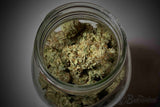
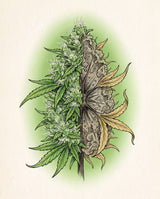
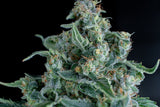
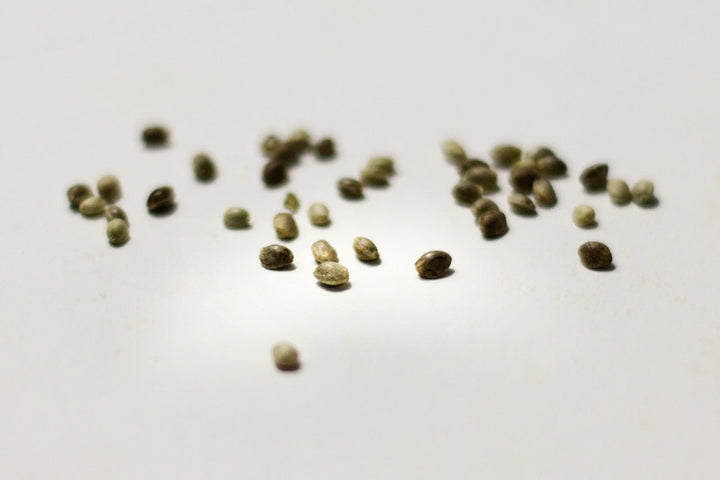
October is when most outdoor weed goes into jars. Outdoor plants come down, the drying racks fill up, and a lot of growers end up with more flower than they will use before spring. How you store it from here decides whether the last jar you open next summer smells like the first one, or like a bag of hay.
This guide is about what happens after the cure. Our curing guide covers the first month in the jar: burping, the 62 percent standard and when the cure is done. Here we pick up once it is finished.
Does Weed Go Bad? What Actually Happens in Storage
Ask "does weed expire" and you will get two answers: "no, it just gets weaker" and "yes, after about a year". Both are half right, because "goes bad" is really three separate processes, and they run on completely different clocks.
Clock one: the smell (weeks to months)
Terpenes are the oils that give each cultivar its smell and much of its flavor. They are volatile, which means they evaporate at room temperature, and they react with oxygen. They are also the first thing you notice missing: a jar that smelled like lemon and pine in November smells like dry grass by March.
Milay, Berman, Shapira, Guberman and Meiri measured this directly. They cured buds from two medical cultivars for a month, then stored them in bottles in the dark at four temperatures, from room temperature down to deep-freeze, for a year.1 Terpenes fell at every storage temperature, and averaged across the terpenes and conditions they measured, more than half was gone after four months. The cannabinoids, over the full twelve months, lost about 26 percent on average. One caveat matters: they only measured terpenes on one of the two cultivars, a CBD-rich one, so treat "half in four months" as the shape of the curve rather than a number for every jar.

Clock two: potency (months to years)
THC breaks down far more slowly. Inside the bud, the plant's THCA slowly sheds a small piece of itself (a molecule of carbon dioxide) and becomes THC, and THC slowly reacts with oxygen and becomes CBN. CBN is far less intoxicating than THC, so a bud that has lost THC to CBN feels weaker, and many people find it sleepier.
The best long-run numbers for dried flower come from Ross and ElSohly at the University of Mississippi, who tracked dried flower of several varieties kept in closed barrels in a dark vault at 68 to 72°F (20 to 22°C). On average it lost 16.6 percent of its THC in the first year, 26.8 percent by the end of the second, 34.5 percent by the end of the third and 41.4 percent by the end of the fourth.2 The loss was fastest in the first year and slower in each year after. The same paper reports an older comparison by Turner and colleagues: THC disappearing at about 3.8 percent a year at 0°F (-18°C), 5.4 at 39°F (4°C) and 6.9 at 72°F (22°C). Those are two-year averages on different material, which is why they read gentler than Ross and ElSohly's first year.

Clock three: mold (it does not run on time at all)
Old weed is weaker weed. It is not dangerous weed. The thing that makes stored flower unsafe is mold, and mold does not care how old a bud is: it cares how wet it is. A jar sealed too wet can grow mold within weeks; a jar held at 58 to 62 percent is too dry for mold to grow, however long it sits. So we say it flatly: a bud that smells musty or shows fuzz goes in the bin, however new it is. We cover how to tell, and what to keep, further down.
How Long Does Weed Last?
Here is the honest answer, by what you care about. This is our reading of the studies above, not a lab's shelf-life date, and a cultivar, a cure and a jar can each move it.
| What you care about | Stored well (sealed jar, 58-62% RH, cool and dark) | Stored badly (plastic bag, warm, light, opened daily) |
|---|---|---|
| Smell and flavor at their best | The first few months; noticeably flatter by about six | A few weeks |
| Most of its strength | About a year (roughly a sixth of the THC gone by month twelve) | A few months |
| Still worth smoking | Two years or more, weaker and sleepier each year | About a year, often dry and harsh |
| Safe | As long as it stays dry and mold-free | As long as it stays dry and mold-free |
The last row is the one people get wrong: a clean, dry bud never turns harmful. There is only a slow slide in smell and strength, and a sudden failure if water gets in.
The Four Things That Break Weed Down
Every storage tip you have ever read is about one of four things: light, heat, air and water. Control those and the container is almost a detail.

Light
Light is the first thing to keep off a jar. Fairbairn, Liebmann and Rowan stored herbal cannabis, resin and pure cannabinoids for up to two years in different conditions and found that ordinary light, not even direct sunlight, was the greatest single factor in cannabinoid loss, most of all in cannabis dissolved in solvent.3 In the same study, THC lost to light did not show up as a matching rise in CBN, so light was destroying it by a different route. Zamengo and colleagues saw the same pattern over four years with flower and hash: light changed how the THC broke down as well as how fast.4

A clear jar is fine in a dark cupboard and terrible on a windowsill: you need tinted glass or a tin only if the jar cannot live in the dark.
Heat
Warmth speeds up the reactions that break THC down, and it drives off terpenes faster too. Fairbairn's team saw little effect of temperature up to 68°F (20°C).3 Above that the damage shows: in Milay's year-long test, 77°F (25°C) caused the largest changes in the cannabinoids of any condition, with THCA down about a third after a year,1 and Ross and ElSohly report that at 99°F (37°C) Turner and colleagues found the THC loss essentially complete.2 That is why the everyday home is a cupboard at 60 to 70°F (16 to 21°C), the same spot our curing guide uses for the cure. Stay away from the shelf above the stove, the top of the fridge, a heat vent, a car and a sunny room.

Air
Oxygen is what turns THC into CBN. Fairbairn's team found that air oxidation in the dark caused significant losses, and that those losses could be cut by taking care not to damage the glands, which they described as "well filled, well closed containers".3 That gives you two rules. Keep air away from the buds (a sealed jar, filled up, opened rarely). And keep the trichome heads intact (trichomes are the tiny resin glands that make a bud look frosted), because a broken gland spills its resin into the air.
The second rule is why you should store whole buds and grind only what you are about to use. In Milay's study, ground flower ended up with lower terpenes than whole buds at every temperature, and more of the CBN that marks oxidized THC.1 A ground pile has far more surface touching air than a bud does.

Water
Water works in both directions. Too little and buds turn brittle: trichomes snap off, the smoke turns harsh and the terpenes that are left evaporate faster. Too much and mold moves in. The target is the same one the cure ends on, 58 to 62 percent relative humidity inside the jar, which matches roughly 10 to 12 percent moisture in the buds. Our curing guide owns that number; for storage, the short version is that down to 55 percent is fine and above 65 percent is mold territory. Drier is safe. Wetter is not.

How to Store Weed, Step by Step
This is the routine we use for anything we will finish within the year. It assumes the flower was dried properly (our drying guide covers that) and cured for at least two weeks.
Step 1 - Finish the cure first
Storage is not a substitute for a cure. Freshly dried buds are still giving off moisture from their centers, and they still need the burping schedule to even out and lose the grassy smell. Wait until the curing guide's signs line up before you treat a jar as storage: it holds 58 to 62 percent after a day sealed, it smells like the cultivar and not like hay, and small stems snap cleanly. The cure itself takes 14 to 30 days; the curing guide has the schedule.
Step 2 - Keep the buds whole
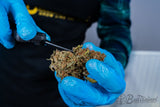
Do not grind, break up or pre-roll the harvest for storage. Leave buds whole, handle them by the stem where you can, and grind each session's worth on the day you use it. Every broken bud exposes more resin heads to air.
Step 3 - Pick a glass jar with a good seal
A glass canning jar with a new flat lid, or a clamp-top jar with a thick rubber gasket, is the default. Glass does not carry smells, does not hold static, and lets you see the buds and a hygrometer (a small humidity meter) without opening it. Pick a size you will empty in a month or two of use, because every opening lets in fresh air.
Step 4 - Fill it close to the top, loosely
This is where storage differs from curing. A curing jar is filled to about 75 percent so the buds have air to trade moisture with during the burps. A storage jar has nothing left to burp, so the empty space above the buds is just a pocket of oxygen. Fill it loosely up to the shoulder, where the glass starts to curve in. Drop the buds in; never press them down.

Step 5 - Add a 58 percent humidity pack
A two-way humidity pack (Boveda and Integra Boost are the common brands) holds the air in a sealed jar at the humidity printed on the pack, adding moisture if the buds are too dry and absorbing it if they are a little too wet. For storage, use 58 percent: it sits at the safe end of the window, and it is the pack our curing guide recommends for finished flower going into long-term storage. A pack is a stabilizer, not a fix. It cannot rescue buds jarred wet.

A pack is spent when it turns stiff and crunchy instead of soft and squishy. Replace it then. In our experience, a pack in a jar you open often is spent within a month or two; in a sealed jar you rarely open, it lasts much longer.
Step 6 - Label the jar
Write the cultivar and the date you jarred it on a strip of tape on the lid. It sounds fussy until the third jar. A date tells you which jar to open first (oldest first, always), and it tells you whether a jar that smells flat is just old or has a problem.

Step 7 - Store it cool and dark
A cupboard or closet at 60 to 70°F (16 to 21°C), away from anything warm and out of any light. Warm home or a big supply? The fridge and freezer section below covers both.
Step 8 - Check it once a month
Once a month, look through the glass, read the hygrometer if the jar has one, and open it for a quick smell. You are checking for three things: a reading creeping above 62 percent (above 65, dry it back as shown below), any musty or ammonia smell, and any white or gray fuzz. Then close it again. That is the whole maintenance routine.

A small digital hygrometer inside the jar makes the check a glance instead of a guess. The one above reads 56 percent: drier than the 58 to 62 percent target, still inside the safe range, and nothing to fix.
The Best Container for Storing Weed
What separates a good container from a bad one: does it keep out air and light, does it squash the buds, and can you control the humidity inside it?

| Container | Keeps out air | Keeps out light | Our verdict |
|---|---|---|---|
| Glass canning jar (Ball, Kerr) | Well, with a fresh flat lid | No; needs a dark cupboard | The default. Cheap, clean and easy to check. |
| Clamp-top jar with rubber gasket | Very well, for more openings | No; needs a dark cupboard | Better than a canning jar for a jar you open often. |
| Tinted or "UV" glass jar (Miron violet glass) | Well | Mostly | Worth it only if the jar cannot live in the dark. In a dark cupboard it does what clear glass does. |
| Metal tin with a seal (CVault) | Well | Yes | Good, especially to carry. You cannot see inside. |
| Barrier bag (Grove Bags, TerpLoc) | Well | Mostly | Good for bulk storage you are holding rather than using. |
| Mylar or foil pouch | Well, heat-sealed | Yes | Fine for bulk, if sealed properly and not crushed. |
| Vacuum-sealed bag | Best | No | For the freezer, with gentle suction. See below. |
| Plastic zip bag, pill bottle or deli tub | Poorly | No | Days, not months. |
| Wooden stash box or cigar humidor | No | Yes | For a few days' supply only. Not airtight, the wood trades smells with the buds, and a cigar humidor is usually set at about 65 to 70 percent for cigars, which is mold territory for weed. |
Why plastic bags lose
Thin plastic lets air through slowly, it gets crushed in a drawer or a pocket, and its static pulls trichome heads off the buds and onto the bag. There is also a measured cost. Birenboim and colleagues at the Volcani Institute stored the same dried flower for four months at 39°F (4°C), some in sealed polyethylene bags and some under vacuum. The plain plastic bag lost the most THCA, about 23 percent.5 Vacuum alone kept a little more and held β-caryophyllene (the peppery smell) steadier, but not by a margin the study could call significant on THCA; the only group that clearly beat the bag, losing 4 percent, combined vacuum with a pre-harvest spray home growers do not use.

Do you need nitrogen flushing?
Probably not. MacLaughlin and MacDonald at Dalhousie University in Nova Scotia stored five cultivars for up to 74 days either in normal air or flushed with nitrogen, the way food is packed to keep oxygen out. They found no significant difference in total cannabinoids or total terpenes, over time or between the two.6 A few individual compounds moved; the totals did not. For a home grower, a well-filled, sealed jar does the job. We found no test of oxygen absorber packets on cannabis at all.
Fridge, Freezer or Cupboard?
Cold slows everything down, so it is tempting to put the whole harvest in the freezer. It is the right call for some of it and the wrong one for the rest, because the deep cold that protects THC best was the worst for the smell in the one study that measured both.
On cannabinoids, cold wins clearly. Milay's room-temperature samples changed the most. Zamengo's four-year study is starker: at 72°F (22°C), in the light or the dark, almost all the THC in their high-potency flower and hash was gone, a far steeper loss than Ross and ElSohly saw, and the significant changes they found were all in those room-temperature samples, not in the ones kept in the fridge at 39°F (4°C) or the freezer at -4°F (-20°C).4 And Majumdar and colleagues in ElSohly's lab, storing flower, extracts and oils for years, found room temperature sped up the breakdown of THC to CBN in most of them, while -4°F (-20°C) preserved the cannabinoids.7
On terpenes, the picture flips. In Milay's study, the two deep-freeze temperatures, -22°F (-30°C) and -112°F (-80°C), lost the most terpenes, with α-pinene (the pine smell) the clearest case, while 39°F (4°C) and room temperature held them better. Weighing cannabinoids and terpenes together, their conclusion was that whole buds at 39°F (4°C) were the best way to store cannabis.1 Note what was not tested: a home freezer runs at about 0°F (-18°C), warmer than either of their freezers, and nobody has measured terpenes at that temperature. Cold also makes trichome heads brittle enough to snap off at a touch, which is the effect hash makers use ice water for. Handle frozen buds as little as you can.

Our rule:
- Finishing it within about six months: a sealed jar with a 58 percent pack in a cool, dark cupboard. Simple and good enough.
- Six to twelve months, or a warm home: the fridge, in a sealed jar you rarely open. Keep it away from food smells, and let the jar warm to room temperature before you open it.
- More than a year: vacuum-seal small portions gently and freeze them. This is the setup our curing guide calls the gold standard for any harvest you will not finish within a year, and the THC numbers back it.

The condensation trap
The one real risk of cold storage is water. Open a cold jar or bag in a warm room and the moisture in that room condenses straight onto the cold buds, the same way a glass of ice water fogs up on a summer day. Do that a few times and you have wet flower in a sealed jar, which is the recipe for mold. Always let a jar or bag come all the way up to room temperature while it is still sealed, which by our rule of thumb takes an hour or two for a jar from the fridge and longer for a frozen bag, and only then open it.

How to freeze weed without ruining it
Divide the harvest into portions you would get through in a week or two, so each bag is opened once. Vacuum-seal each portion with gentle suction: stop when the film touches the buds, before it starts squashing them, or use a sealer with a pulse or gentle setting. Lay the bags flat in the freezer where nothing will be piled on them. When you take one out, leave it sealed on the counter until it is at room temperature, then open it and move the buds into a jar with a 58 percent pack. Do not refreeze it.

That is the line not to cross. With full suction, the buds are pressed into one slab and the trichome heads break off against the film; the crumbs you can see inside the bag are resin you will never get back. Vacuum sealing does not ruin weed; over-squeezing it does.

How to Tell If Stored Weed Has Gone Bad
Before you smoke from a jar that has sat a while, look and smell. It takes thirty seconds, and it is the only safety check you have at home.

Mold: bin it
Look for fuzz: white, gray or blue-green, like fine cotton or dust that sits on top of the bud rather than glittering on it. Look inside dense buds, because mold often starts in the center. Smell for must, damp basement, wet cardboard or a sharp ammonia note. Mold on cannabis is not always the gray Botrytis of bud rot; on dried flower it is often Penicillium or Aspergillus. McKernan and colleagues sequenced the fungi on dispensary flowers and found several species that make toxins, some of which the standard culture tests missed.8

Our rule for a jar: bin the moldy bud and every bud that touched it. If more than one bud has it, or the whole jar smells musty, bin the jar. Do not cut the patch off, wash it, or turn it into edibles or extract; our bud rot guide explains what happens after harvest and why extraction concentrates mold toxins rather than removing them. If you are not sure whether you are looking at mold or trichomes, our trichome guide has a side-by-side of trichomes and mold under a loupe.

Too dry: not dangerous, just harsh
An over-dry bud crumbles to dust when you pinch it instead of springing back, its small stems crumble rather than snap cleanly, and the smell is faint and hay-like. It is safe to smoke, but harsh, and it has lost terpenes that are not coming back. The rescue section below shows how to bring the moisture back up.

Just old: weaker, not unsafe
Old weed fades to a dull brown or straw color, the trichomes look dark amber to brown, and the smell is flat. It is weaker, because more of its THC has become CBN, and many people find it more sedating. If it is dry, clean and mold-free, it is still safe; it is just not what you grew.


How to Fix Weed That Is Too Dry or Too Wet
Too dry: rehydrate it with a humidity pack
Put the dry buds in a sealed glass jar with a 62 percent two-way pack and leave it closed. Check it daily with a hygrometer; over a few days the buds will come back up toward the pack's humidity and turn pliable again. That restores the moisture, not the smell: evaporated terpenes are gone.
Skip the old tricks: an orange peel, a slice of bread, a lettuce leaf or a damp paper towel in the jar. They do add moisture, but uncontrolled, straight onto the buds, along with sugar and their own mold spores. That is a reliable way to turn a dry jar into a moldy one.

Too wet: open it and let it dry back
If a jar's hygrometer reads above 65 percent, or the buds feel spongy, open the jar and spread the buds on a clean plate or rack in a cool, dark room with gentle air movement for a few hours, then jar them again and check the next day. Repeat until the reading holds between 58 and 62 percent. If you see fuzz or smell must, it is past rescuing; see the mold rule above. Before you trust any reading, check the hygrometer itself: our grow tent humidity guide shows the salt test that tells you whether a hygrometer reads true.
Storing a Big Harvest for a Year or More
An outdoor plant can leave you with a pound or more (about 450 g) of dried flower, far more than one jar. The same rules apply; the trick is to split the harvest so you only ever open a small part of it at a time.

- Split it by month. Work out roughly how much you use in a month or two and pack the harvest into containers of that size. Only the one you are using gets opened.
- Use the cold for the far end. The next few months' supply goes into jars in the cupboard; the rest gets vacuum-sealed in portions and frozen, as above.
- Label everything with the date, and open the oldest first.
- Keep trim separate. Sugar-leaf trim saved for hash or butter goes in its own sealed container, dry and cold, and gets used first, because it has more broken surface than whole buds.
Our trimming guide covers what to do with trim, and if you are still deciding when to cut, the harvesting guide covers the window.
What the Research Actually Says About Storing Cannabis
Here is where the evidence stands, and where it runs out.
- Terpenes go first, and nothing fully stops it. Milay and colleagues found terpenes falling fast under every condition they tried, and wrote that it is very difficult to preserve the original terpene content in stored buds.1 The best they found was whole buds at 39°F (4°C).
- Light is the worst single enemy of cannabinoids. Fairbairn, Liebmann and Rowan found light caused more loss than anything else, most of all in extracts, and concluded that carefully prepared flower stays reasonably stable for one to two years in the dark at room temperature.3
- THC loss is real but slow: 16.6 percent in the first year in a dark vault, 41.4 percent after four years.2
- Cold protects cannabinoids. Fridge and freezer samples avoided the losses seen at room temperature over four years,4 and -4°F (-20°C) preserved them in ElSohly's lab.7 But the deepest freezes lost the most terpenes in Milay's test, and nobody has tested terpenes at home-freezer temperature.
- A plain plastic bag lost the most THCA over four months; vacuum alone did a little better, and only vacuum plus a pre-harvest spray beat the bag by a significant margin.5
- Nitrogen flushing did not help total cannabinoids or terpenes over two and a half months.6
- Grinding before storage costs you: lower terpenes and more oxidation than whole buds.1
What nobody has tested, as far as we can find: tinted "UV" glass against clear glass in the dark, 58 against 62 percent packs over a year, oxygen absorber packets, or how long terpenes last in a home freezer. Where this guide gives a rule on those, it is our practice, and we have said so.
Common Weed Storage Mistakes

- A jar on the windowsill or the counter. Light is the fastest way to lose THC. Dark, always.
- A jar above the stove or on top of the fridge. Warm spots drive off terpenes and speed up the THC-to-CBN conversion.
- Plastic bags for anything longer than a few days. Crushed buds, stripped trichomes, more THCA lost.
- Grinding the whole harvest at once. Ground flower loses terpenes and oxidizes faster.
- A big jar with a few buds in it. All that empty space is oxygen. Move the last buds into a smaller jar.
- Fruit peel or bread in the jar. Uncontrolled water on the buds is how mold starts.
- Opening a cold jar straight away. Condensation turns cold storage into wet storage.
- Moving buds into storage before the cure is done. Buds still giving off water will push a sealed, unburped jar above 65 percent.
Frequently Asked Questions
How long does weed last?
Stored well, in a sealed glass jar at 58 to 62 percent humidity in a cool, dark place, weed keeps most of its strength for about a year and stays worth smoking for two years or more. The smell fades much sooner, within a few months. In Ross and ElSohly's four-year study, flower in the dark lost 16.6 percent of its THC in the first year and 41.4 percent by year four.
Does weed go bad or expire?
Weed has no expiry date. It slowly loses smell and strength, and old weed is weaker because THC turns into CBN, which many people find sleepier. It only becomes unsafe if it grows mold, and mold comes from flower stored too wet, not from age. A dry, clean bud from two years ago is weak, not dangerous; a musty bud from last month goes in the bin.
What is the best way to store weed long term?
Keep the buds whole in a glass jar filled close to the top, add a 58 percent two-way humidity pack, and store it in a cool, dark cupboard. For six to twelve months, a sealed jar in the fridge was the best all-rounder in the research. For more than a year, vacuum-seal small portions with gentle suction and freeze them, and let each bag warm up sealed before you open it.
Should I store weed in the fridge?
The fridge works well for a jar you will keep six to twelve months and open rarely. Weighing cannabinoids and terpenes together, Milay and colleagues' year-long test found whole buds at 39°F (4°C) the best way to store cannabis. Keep the jar sealed and away from food smells, and always let it warm to room temperature before opening it, or condensation will wet the buds.
Can you freeze weed?
Yes, and it is the best way to protect THC for a year or more. Vacuum-seal small portions with gentle suction, lay them flat, and thaw each bag sealed to room temperature before opening. Frozen trichomes are brittle, so do not handle frozen buds. Deep cold does not save the smell: in the one study that measured it, the two deepest freezes lost the most terpenes.
Is a mason jar good for storing weed?
Yes. A glass canning jar with a fresh flat lid is the default container: it seals well, holds no smell or static, and lets you see the buds. It does not block light, so it belongs in a dark cupboard. For storage, fill it loosely close to the top, unlike a curing jar, which is filled to about 75 percent.
Should I use Boveda 58 or 62 for storing weed?
Use 58 percent for storage. Both Boveda 58 and 62 keep a sealed jar inside the safe window, but 58 sits further from the mold line, the margin you want in a jar left alone for months, and it is what our curing guide recommends for finished flower going into long-term storage. Use 62 to rehydrate buds that have gone too dry. Replace a pack once it turns stiff and crunchy.
Are Grove Bags or Mylar bags good for storing weed?
Yes, for bulk storage you are holding rather than opening every day. Barrier bags such as Grove Bags or TerpLoc keep out most air and light and regulate humidity themselves, and a heat-sealed Mylar pouch blocks light and air well. The catch is crushing: keep them where nothing presses on the buds, and move a working supply into a jar.
How do you rehydrate dry weed?
Seal the dry buds in a glass jar with a 62 percent two-way humidity pack and check it daily. Over a few days the buds come back up to the pack's humidity and turn pliable again. That restores moisture, not the lost smell. Do not use orange peel, bread or lettuce: they add water and sugar unevenly and are a common way to start mold.
How do you know if weed has mold?
Look for white, gray or blue-green fuzz sitting on the bud like fine cotton, rather than trichomes glittering on it, and check inside dense buds. Smell for must, damp basement or ammonia. If you find it, bin that bud and every bud that touched it, and bin the whole jar if more than one bud has it. Never cut it off, wash it or extract it.
Does vacuum sealing weed ruin it?
No, over-squeezing it does. Vacuum sealing keeps out air, and in Birenboim and colleagues' four-month test it did a little better than a plain plastic bag, which lost the most THCA. But full suction flattens buds and breaks off trichome heads. Use gentle suction, stop when the film touches the buds, and seal small portions you will open once.
Does weed lose potency over time?
Yes, slowly. THC reacts with oxygen and becomes CBN, which is far less intoxicating. Ross and ElSohly measured a loss of 16.6 percent in the first year in the dark and 41.4 percent after four years. Light and warmth speed it up, cold slows it down, and the smell fades much faster than the potency.
Is it OK to store weed in a plastic bag?
For a few days, yes. For months, no. Thin plastic lets air through, crushes the buds, and its static pulls trichome heads off. In Birenboim and colleagues' four-month test, flower in sealed polyethylene bags lost the most THCA, about 23 percent. Move anything you want to keep into a glass jar.
Where to Go From Here
Storage is the last step of a grow and the easiest one to get right: whole buds, a full glass jar, 58 to 62 percent, cool and dark, opened rarely. If your jars are full and the outdoor season is over, this is a good time to plan the next grow indoors. Our guide to growing weed indoors covers the tent, the light and the climate, and BudCups and BudClips make the seedling and training stages simpler when you get there.
References
- Milay, L., Berman, P., Shapira, A., Guberman, O., & Meiri, D. (2020). Metabolic profiling of cannabis secondary metabolites for evaluation of optimal postharvest storage conditions. Frontiers in Plant Science, 11, 583605. doi:10.3389/fpls.2020.583605
- Ross, S. A., & ElSohly, M. A. (1997). CBN and delta-9-THC concentration ratio as an indicator of the age of stored marijuana samples. Bulletin on Narcotics, 49(1), 139-147. UNODC
- Fairbairn, J. W., Liebmann, J. A., & Rowan, M. G. (1976). The stability of cannabis and its preparations on storage. Journal of Pharmacy and Pharmacology, 28(1), 1-7. doi:10.1111/j.2042-7158.1976.tb04014.x
- Zamengo, L., Bettin, C., Badocco, D., Di Marco, V., Miolo, G., & Frison, G. (2019). The role of time and storage conditions on the composition of hashish and marijuana samples: A four-year study. Forensic Science International, 298, 131-137. doi:10.1016/j.forsciint.2019.02.058
- Birenboim, M., Chalupowicz, D., Kenigsbuch, D., & Shimshoni, J. A. (2024). Improved long-term preservation of cannabis inflorescence by utilizing integrated pre-harvest hexanoic acid treatment and optimal post-harvest storage conditions. Plants, 13(7), 992. doi:10.3390/plants13070992
- MacLaughlin, L. L., & MacDonald, M. T. (2024). Is nitrogen-modified atmosphere packaging a tool for retention of volatile terpenes and cannabinoids in stored Cannabis sativa inflorescence? Journal of Cannabis Research, 6, 42. doi:10.1186/s42238-024-00253-9
- Majumdar, C. G., Radwan, M. M., Chandra, S., Wanas, A. S., Elhendawy, M. A., Ibrahim, E. A., Geweda, M. M., Lata, H., & ElSohly, M. A. (2026). Stability of cannabinoids in cannabis: Plant material, extracts, oil formulations, and isolates (CBD and delta-9-THC) under different storage conditions. Cannabis and Cannabinoid Research, online ahead of print. doi:10.1177/25785125261478275
- McKernan, K., Spangler, J., Zhang, L., Tadigotla, V., Helbert, Y., Foss, T., & Smith, D. (2015). Cannabis microbiome sequencing reveals several mycotoxic fungi native to dispensary grade Cannabis flowers. F1000Research, 4, 1422. doi:10.12688/f1000research.7507.2

About the Author
Henrique Dias is the CEO and co-founder of BudTrainer. He is a mechanical engineer who also holds a graduate certificate in Commercial Cannabis Production from Niagara College in Ontario, Canada - the first college-level cannabis cultivation program in North America. Before founding BudTrainer, Henrique worked with Health Canada licensed cannabis producers, where he gained hands-on experience in cultivation, processing, and post-harvest management of cannabis at commercial scale. He started BudTrainer to bring that same level of craft to home growers through better-designed gardening tools and clear, science-backed education.
DISCLAIMER: Everything taught and sold by BudTrainer® is to be used strictly for legal purposes. We do not endorse the production of illegal substances and it is your duty to ensure that you are complying with the law. The words "hemp," "cannabis," "weed," and "marijuana" are used interchangeably to refer to the same plant (legal hemp with less than 0.3% THC) for the purposes of this lesson.